
Central Pennsylvania
His grandfather ran freight for the Pennsylvania Railroad for forty-seven years. Earl got his first train set at three, built his own first layout at thirteen, and has never really stopped.
- 1960Building since
- 1220Photographs
- 88Films
- 11Exhibits
2012–2025
Departures
Ten bodies of work — the layouts he built, and the railroads he went to see.
Built by hand
The Layouts
Sixty-five years of building, from a six-by-eight sheet of plywood to a room twenty feet square.
The real thing
On the Rails
The real thing — locomotives, stations, and the old lines he goes out to walk and photograph.
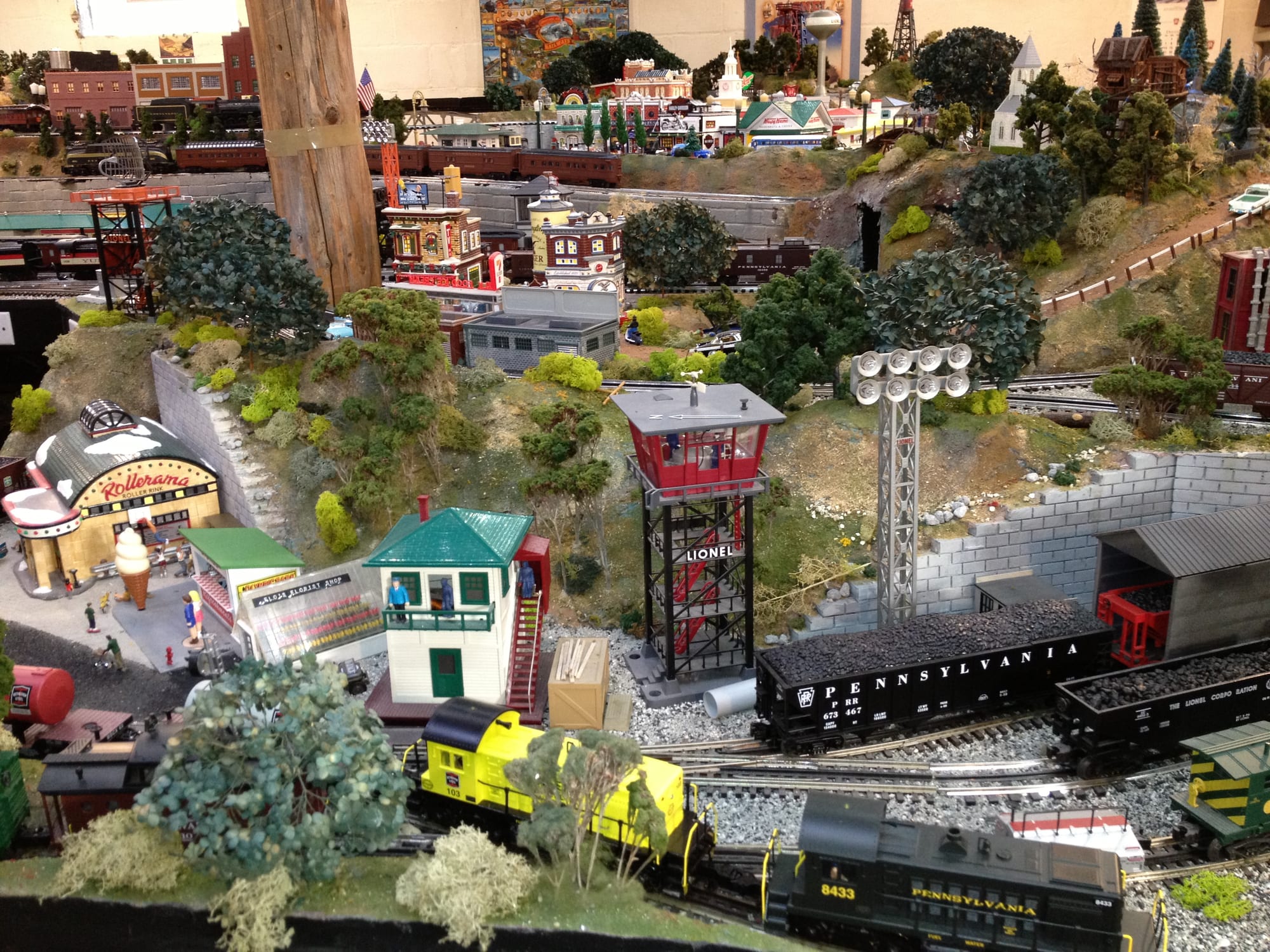
Exhibit 01 · The beginning
The First Michigan Layout
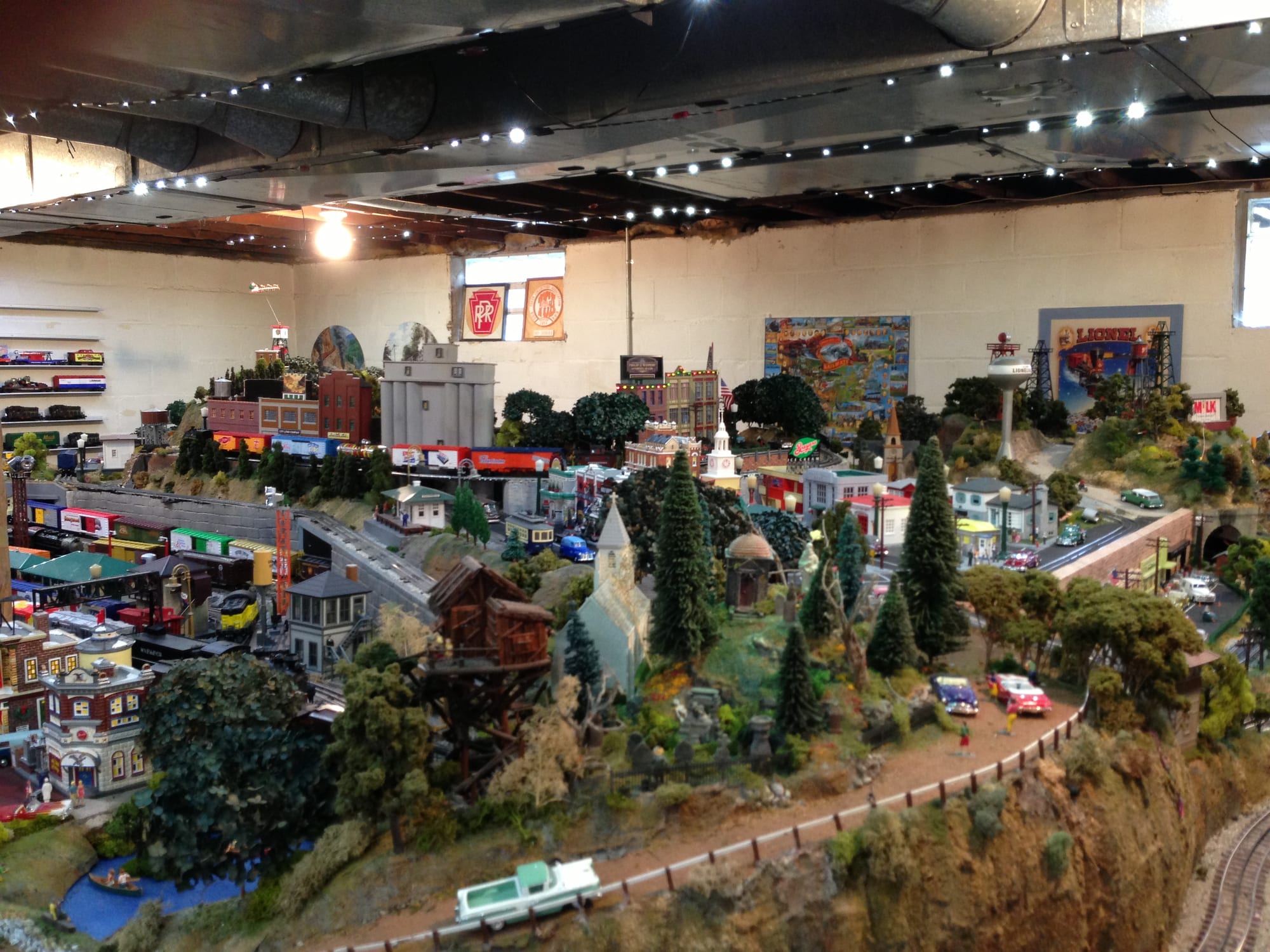
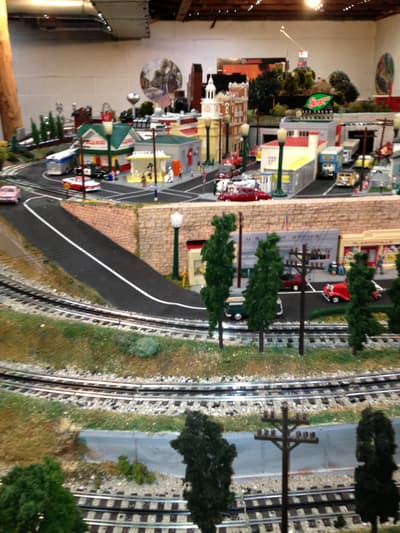
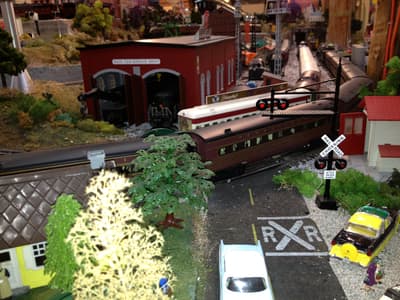
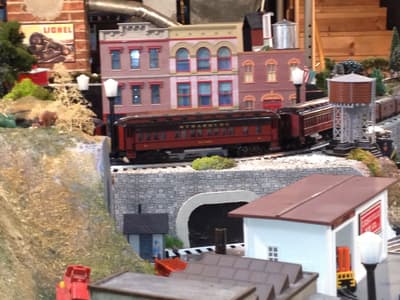
The biggest layout Earl ever built — close to twenty feet by twenty feet — filling a room in Michigan, and the oldest work in this archive. A whole town under one roof: a main street, a church and cemetery, a treehouse, a quarry, trains running on several levels, and a Pennsylvania Railroad keystone hung on the wall above it all. Photographed across 2012 and 2013.
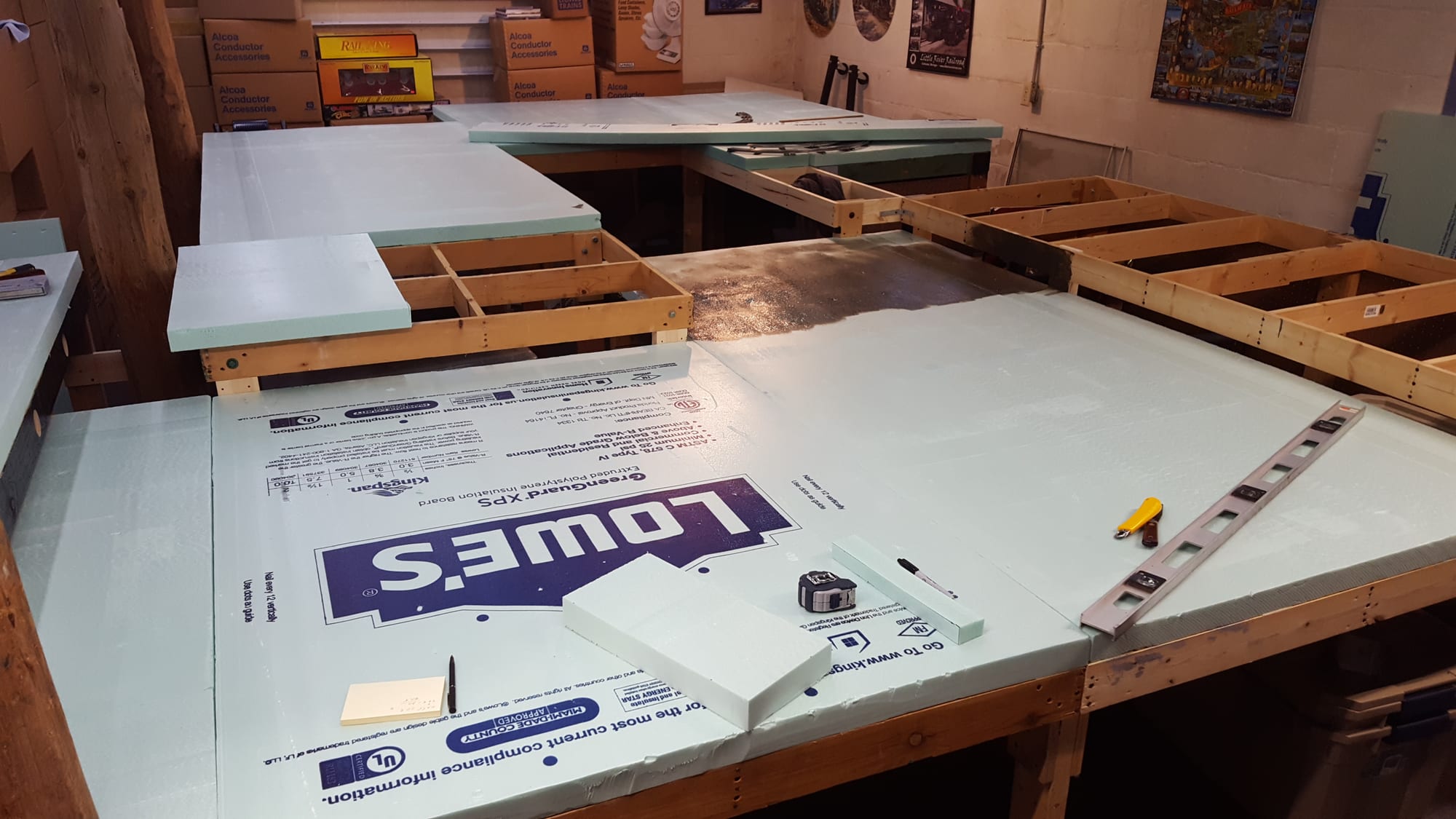
Exhibit 02 · The rebuild
The Second Michigan Layout
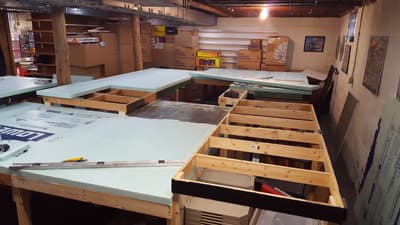
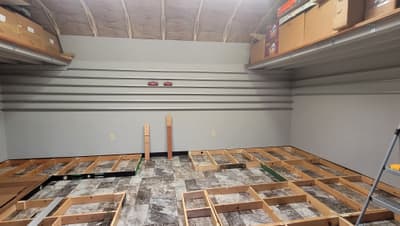
Autumn 2018, and the benchwork goes back down to bare plywood and foam. These photographs follow the second Michigan layout from an empty room to running track.
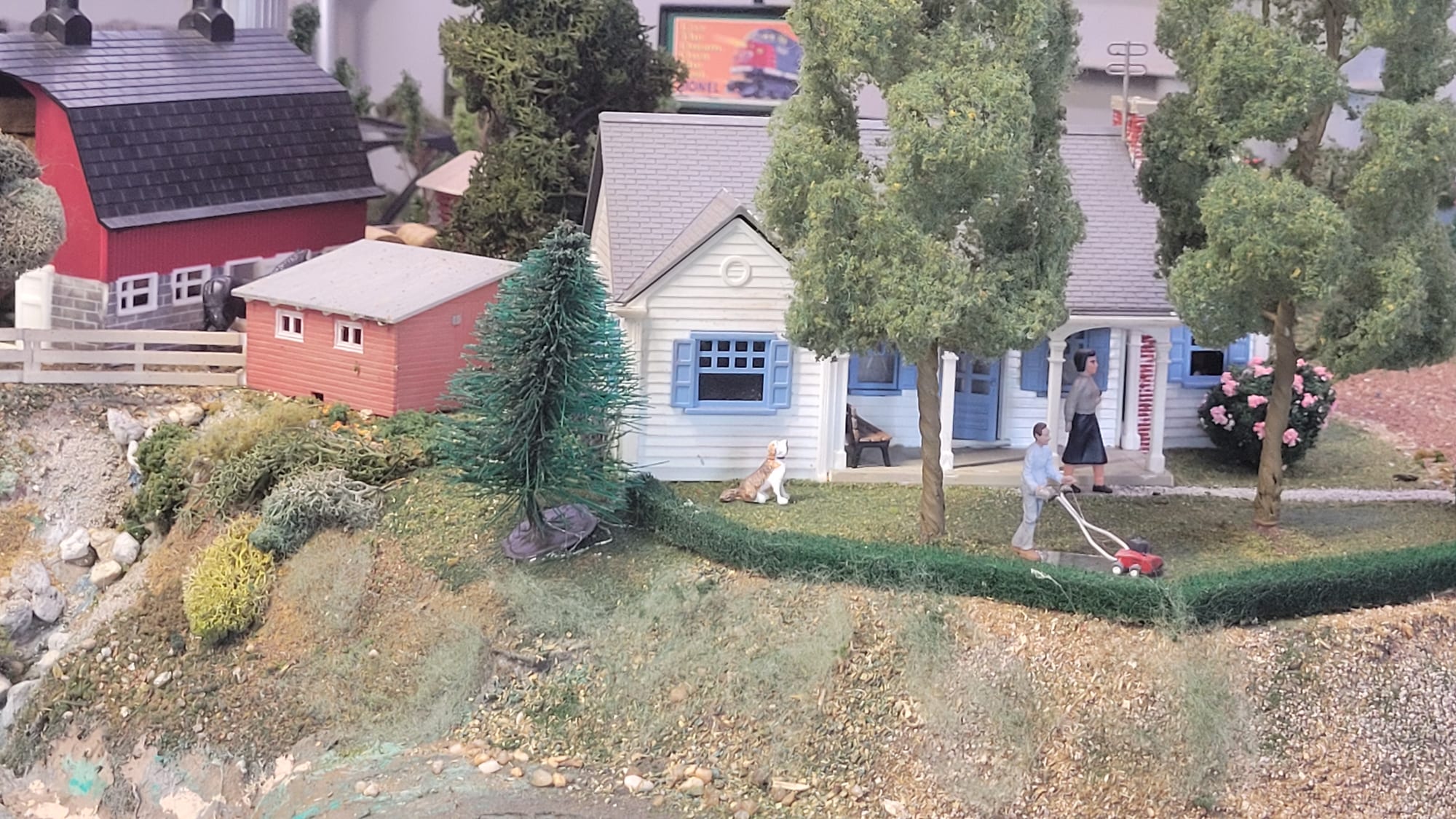
Exhibit 03 · A new one every year
The Annual Layouts
2018
2022
2023
2024
2025
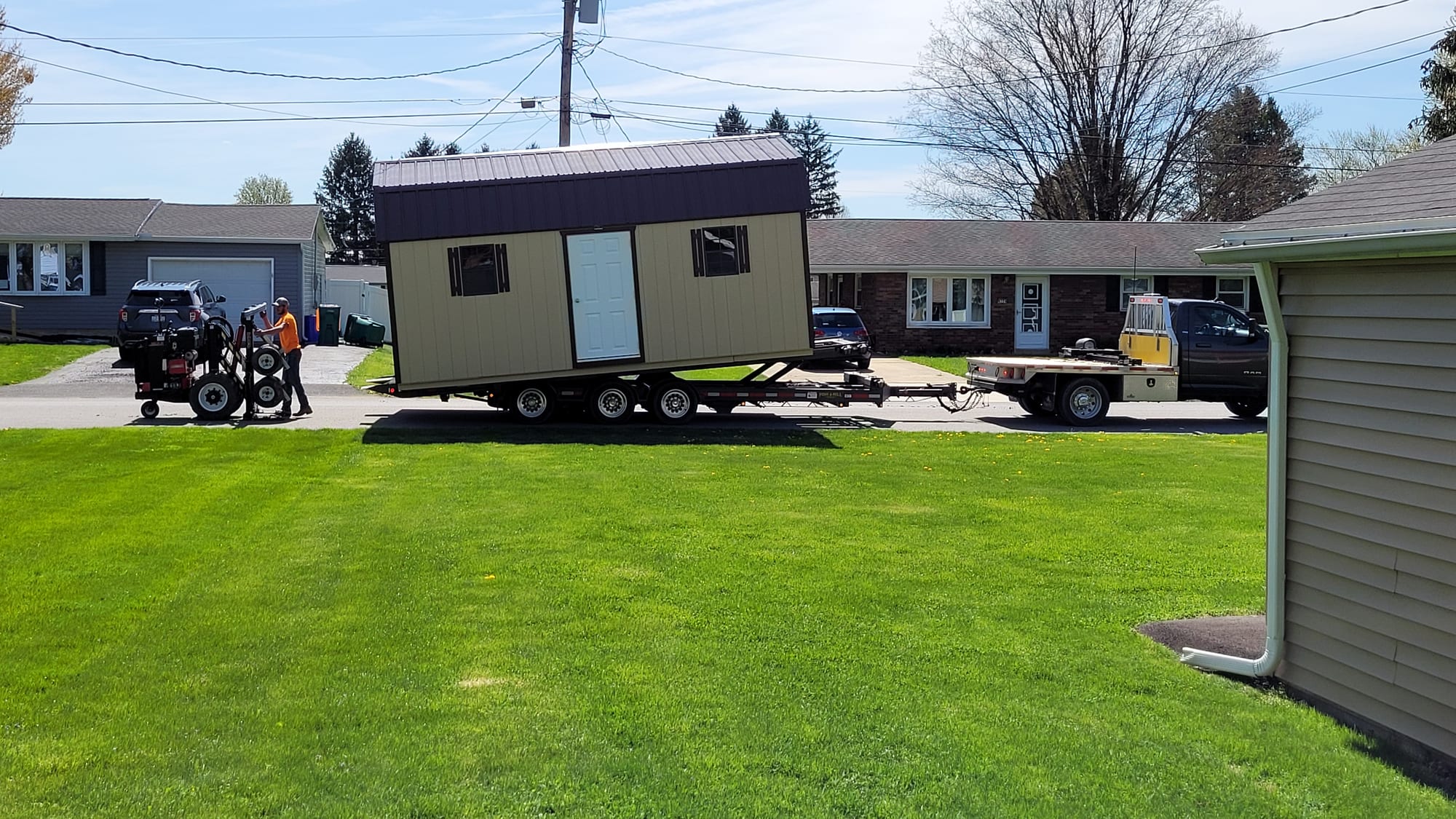
Exhibit 04 · The building
Earl's Train Station
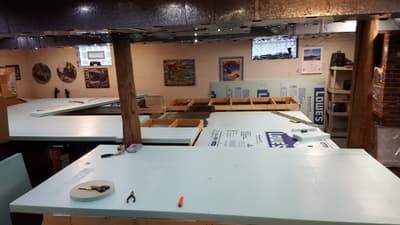
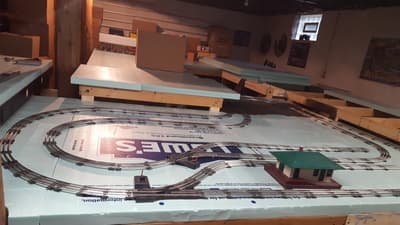
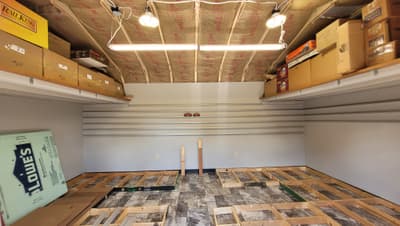
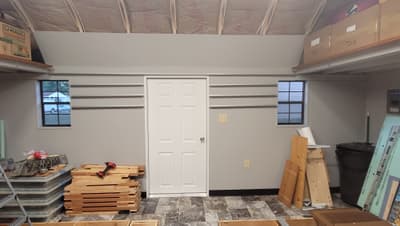
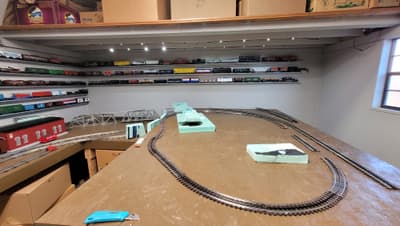
He had the building made for the purpose. An Amish crew built it by hand and delivered it to the back yard on a trailer in the summer of 2022 — and that is where their work ended and his began. Every single thing since is Earl's: the insulation, the wiring, the walls, the benchwork, and everything running on top of it. Six or more trains run at once now, through tunnels and over bridges, past switches and through several towns. Accessories he has had for decades were stripped, repainted and restyled back into service. The ground cover is lichen and whatever else does the job convincingly. He calls it Earl's Train Station.
April 20, 2022
April 21, 2022
April 22, 2022
April 23, 2022
April 25, 2022
April 26, 2022
May 28, 2022
June 5, 2022
June 9, 2022
June 19, 2022
June 20, 2022
June 29, 2022
July 16, 2022
July 17, 2022
July 19, 2022
July 21, 2022
July 25, 2022
August 11, 2022
August 15, 2022
August 16, 2022
August 17, 2022
August 21, 2022
August 23, 2022
August 28, 2022
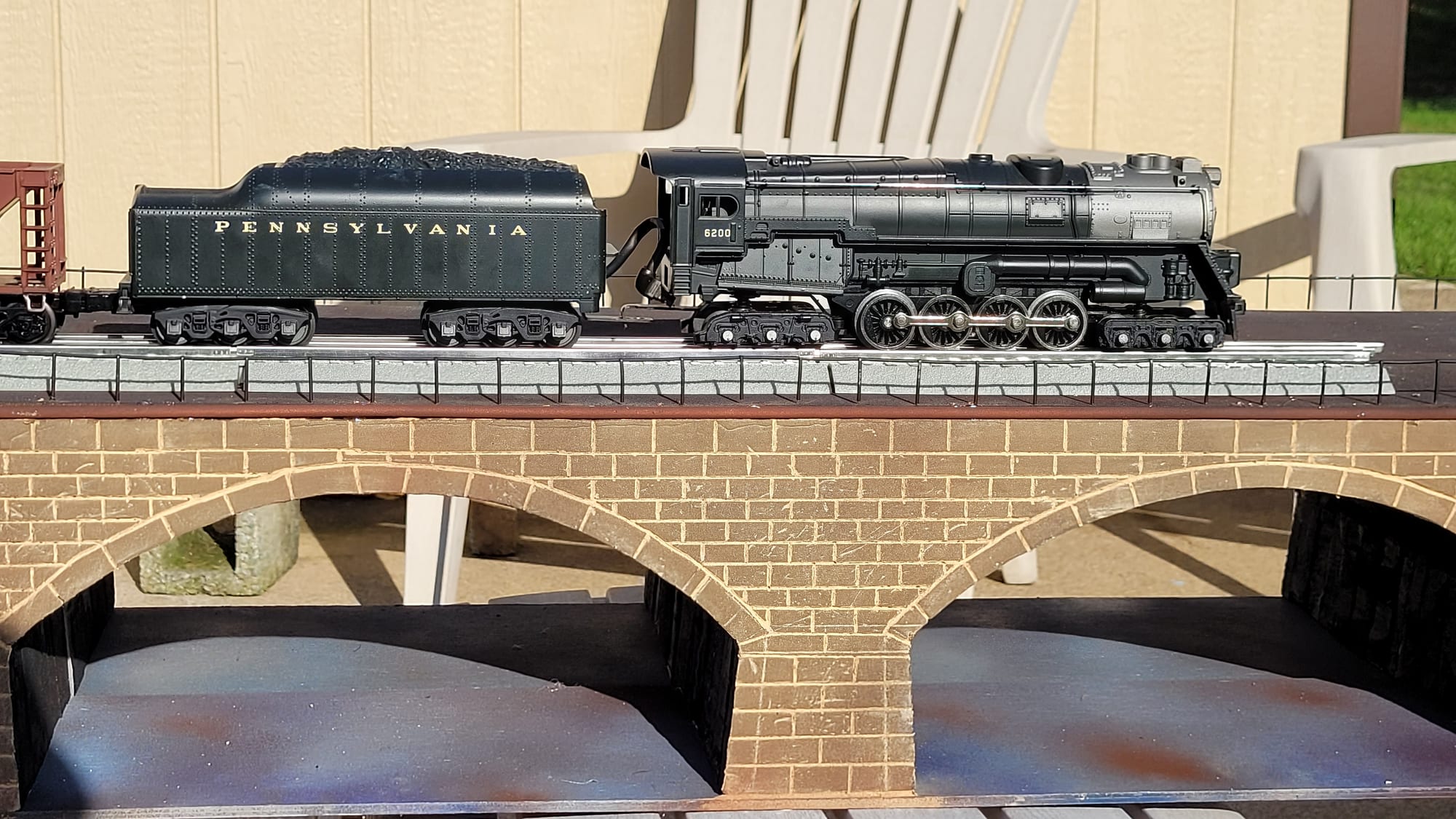
Exhibit 05 · The commission · Christmas 2023
The Rockville Bridge
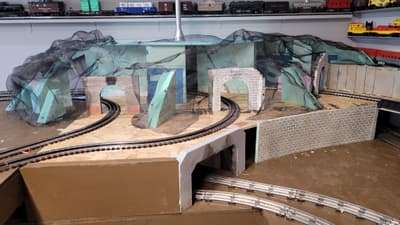
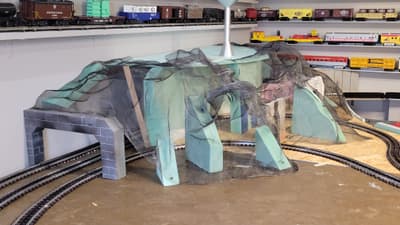
He built it for the museum's 2023 Christmas layout, to bring more people through the door — and it worked. The Rockville Bridge is about fifteen miles from Mechanicsburg, and he chose it for exactly that: a piece of Pennsylvania Railroad history standing in his own back yard. Every part of it is his own hand — foam cut with a hot wire and a saw, arches shaped one at a time, then painted and aged. Look above the arch openings and you will find soot: he darkens the stone where decades of steam exhaust would have blackened it. Nobody asks for that. It is the reason his layouts look the way they do.
The real thing
The Rockville Bridge carries the former Pennsylvania Railroad main line across the Susquehanna just north of Harrisburg. Built between 1900 and 1902 under PRR chief engineer William H. Brown, it took nearly 300 stonemasons, 220,000 tons of stone and 600,000 barrels of cement. Its forty-eight 70-foot arches run 3,830 feet — the longest stone masonry arch railroad viaduct in the world. It still carries around sixty Norfolk Southern trains a day.
September 6, 2023
September 7, 2023
September 9, 2023
September 13, 2023
September 16, 2023
September 18, 2023
September 21, 2023
September 29, 2023
September 30, 2023
October 3, 2023
October 5, 2023
November 7, 2023
November 9, 2023
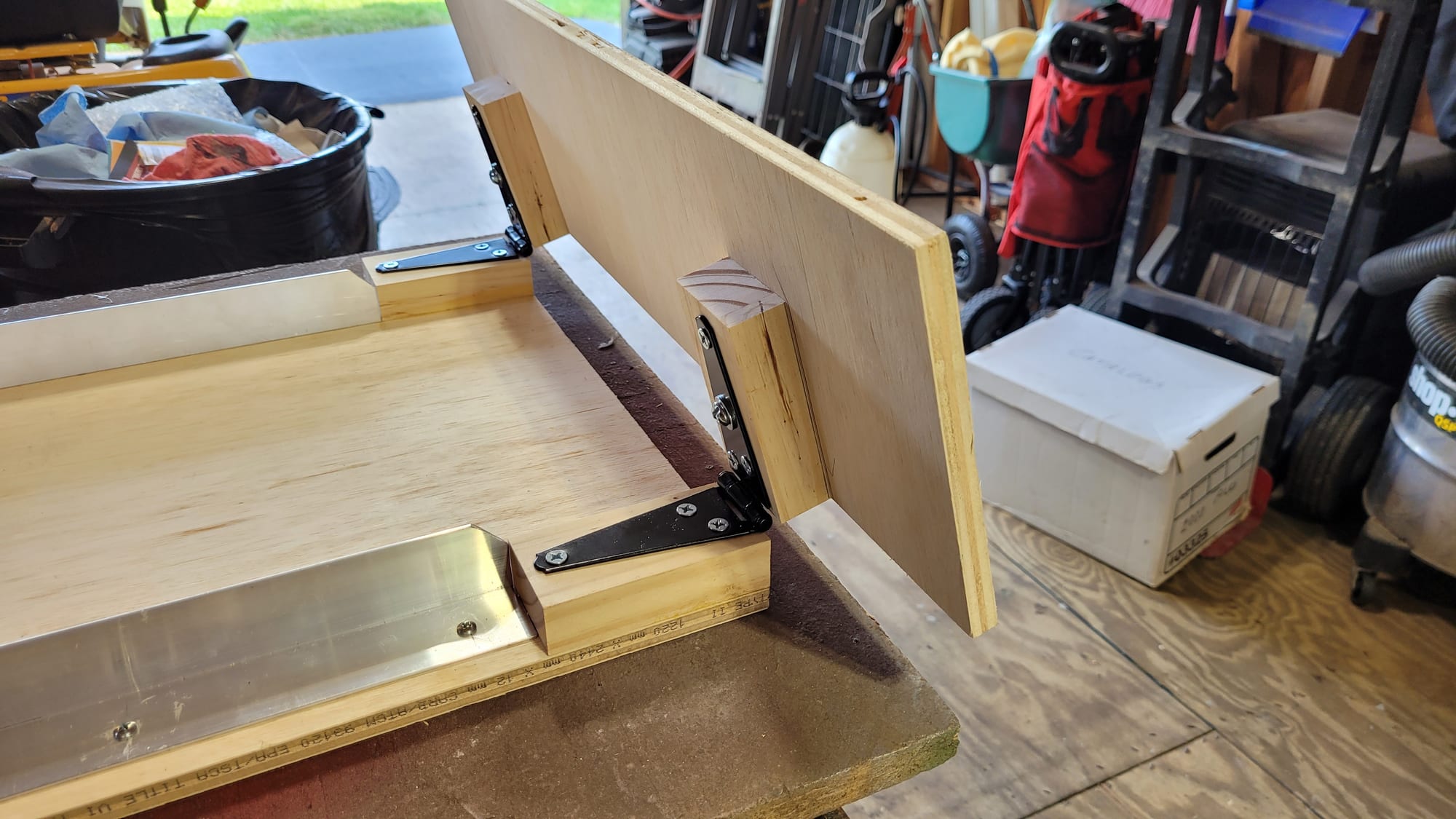
Exhibit 06 · Open to the public
The Museum
The Mechanicsburg Museum Association has been saving the borough's railroad history since 1975 — the 1866 Stationmaster's House, the 1867 Passenger Station, the 1886 Freight Station and the 1899 Washington Street Station, all built by the Cumberland Valley Railroad. Earl leads the crew that builds the model railroad inside them.
The real thing
The Mechanicsburg Museum Association has preserved the borough's Cumberland Valley Railroad buildings since 1975 — the 1866 Stationmaster's House, the 1867 Passenger Station, the 1886 Freight Station and the 1899 Washington Street Station. The CVRR reached Mechanicsburg around 1838; passenger service on the line ended in 1952.
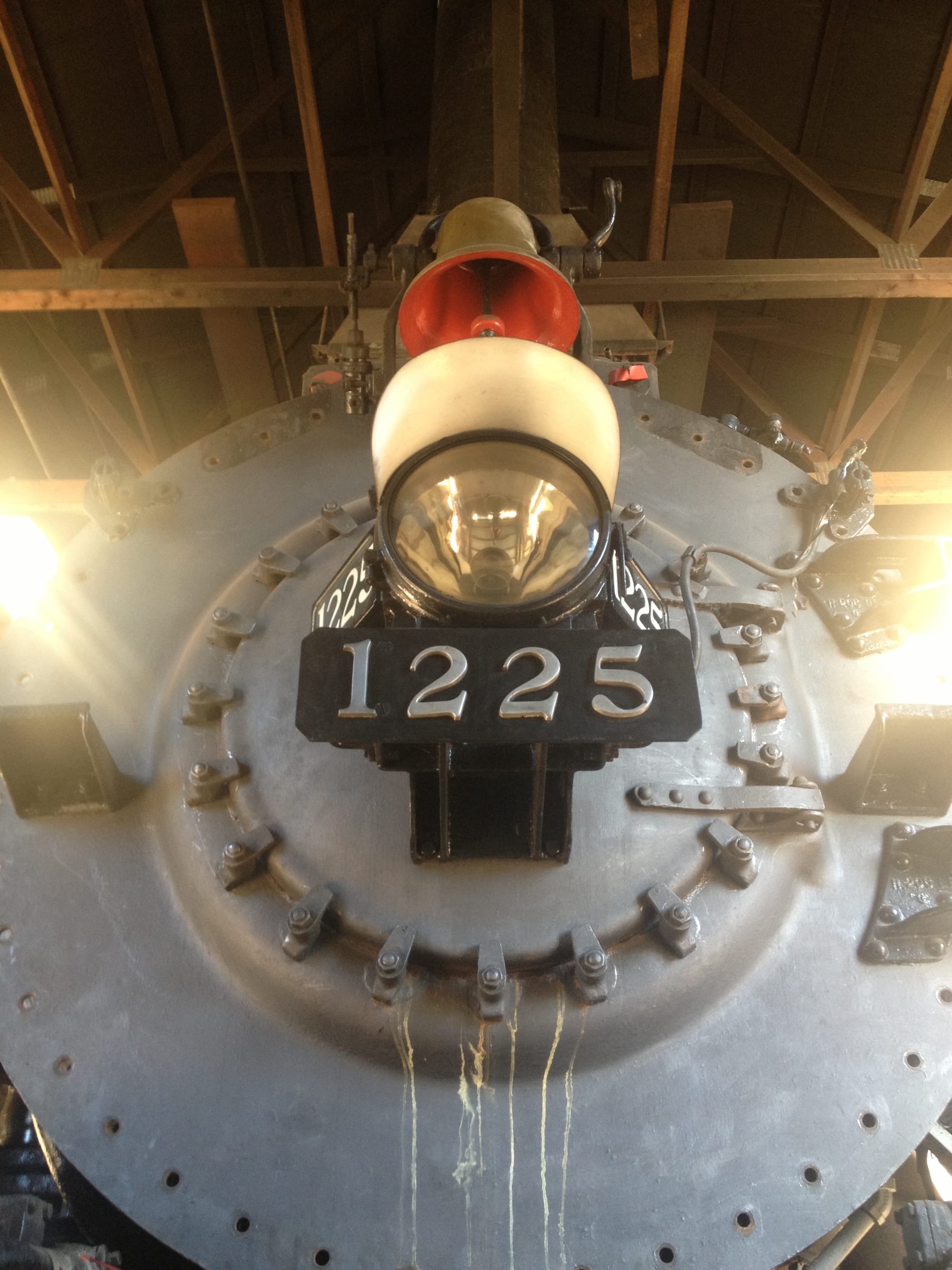
Exhibit 07 · Owosso, Michigan · the fifteen-year rebuild
Pere Marquette 1225
When Earl retired in 2012 he went to work on a steam locomotive. Pere Marquette 1225 — a 1941 Lima-built Berkshire, one of the few mainline steam engines in America still under her own power — was due her fifteen-year rebuild at the Steam Railroading Institute in Owosso, Michigan. He drove up one or two days a week for a year and a half and did a bit of everything, but the job that took the hours was the staybolts. A new firebox went in, held by more than four thousand of them, and every one needs a weep hole drilled down its centre — a telltale that vents steam if the bolt ever cracks, so a failure announces itself instead of hiding. They ran from seven inches to thirty-one. The long ones took ninety minutes apiece to gun-drill. He had tool-and-die training and a career in engineering behind him — more than fifty patents' worth — and he enjoyed it.
The real thing
Pere Marquette 1225 is a 1941 Lima-built Berkshire, one of very few mainline steam locomotives in America still under her own power. She is kept and operated by the Steam Railroading Institute in Owosso, Michigan.
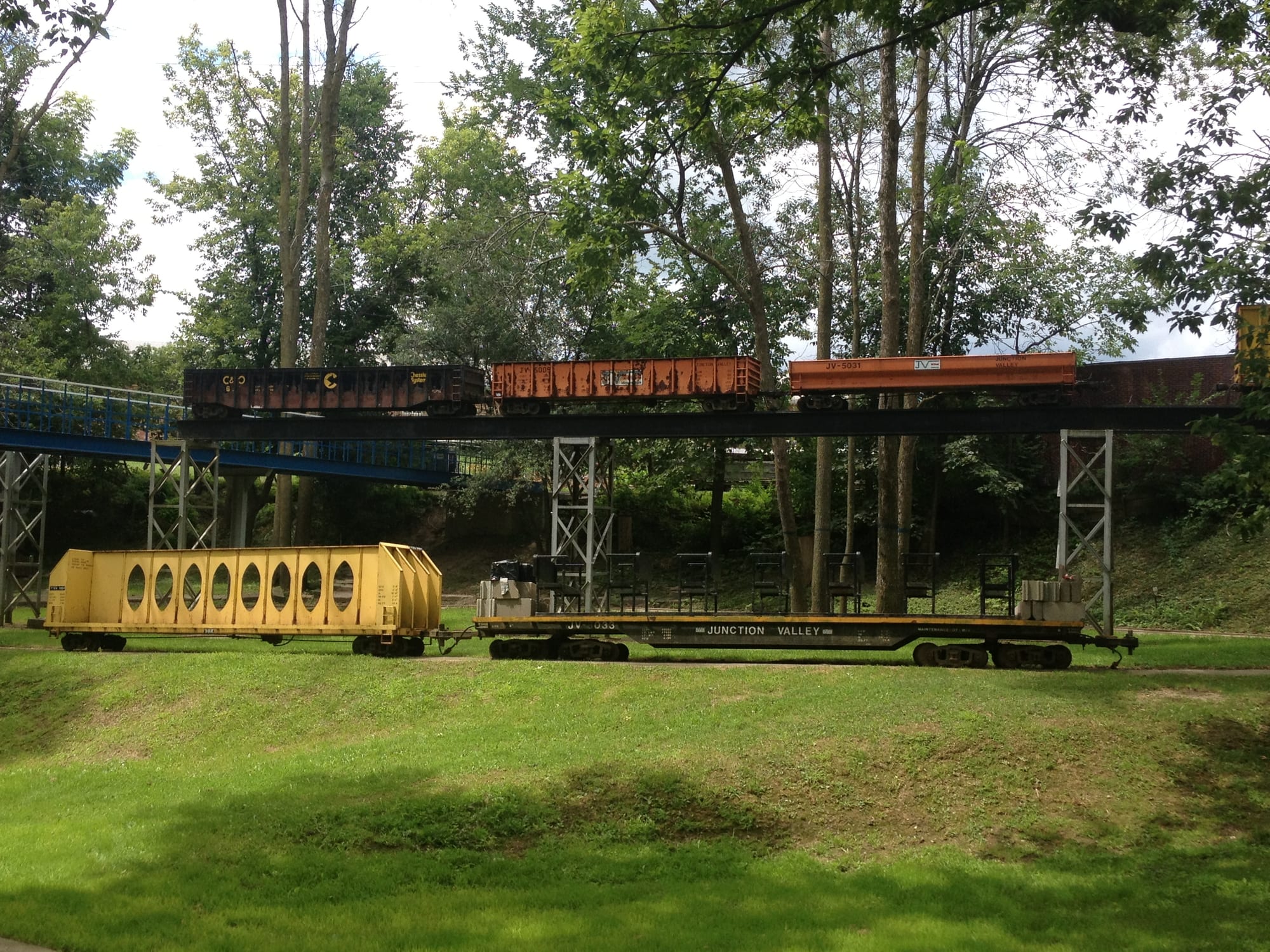
Exhibit 08 · Bridgeport, Michigan
Junction Valley Railroad
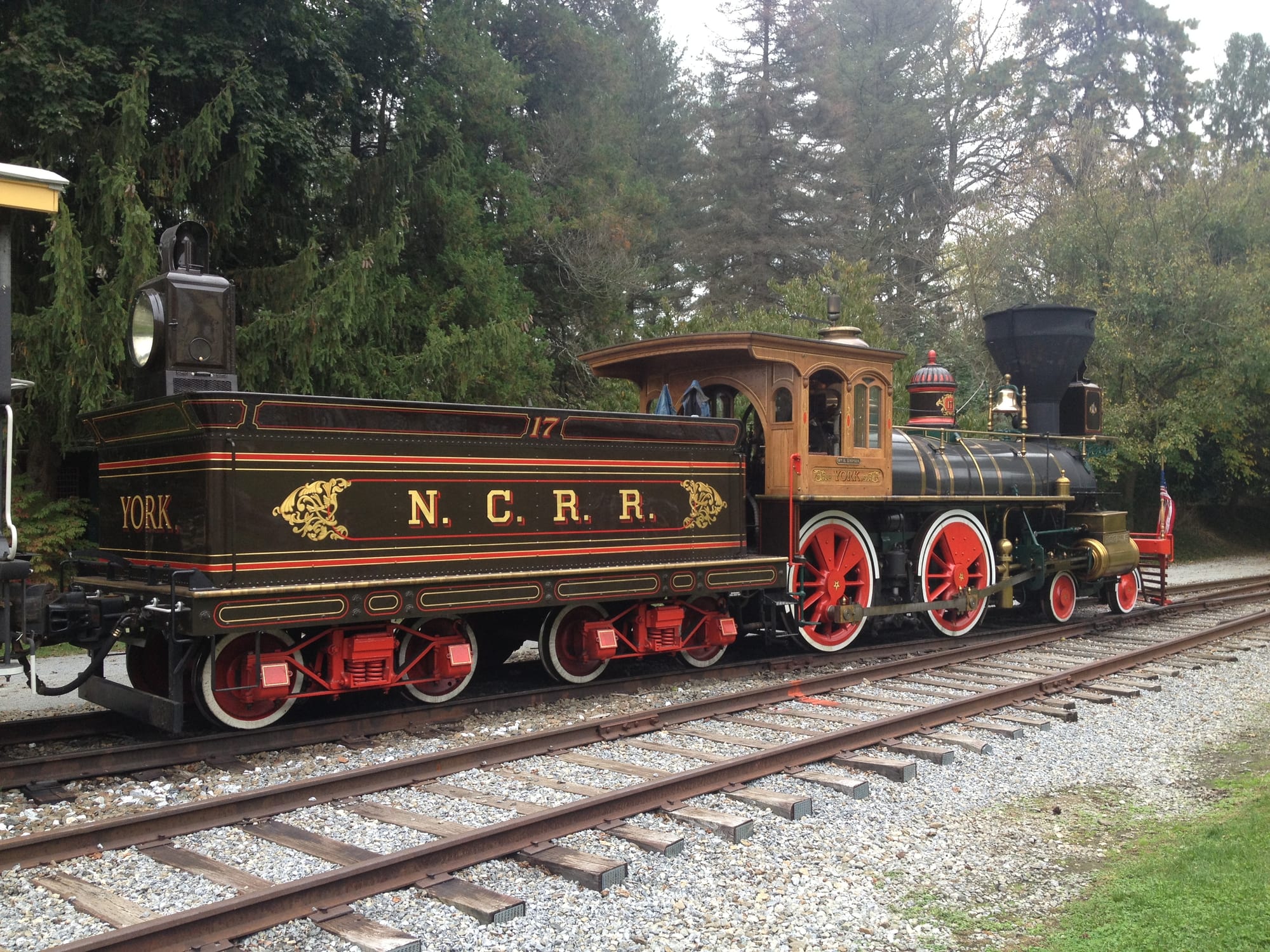
Exhibit 09 · Where the real ones run
Trackside
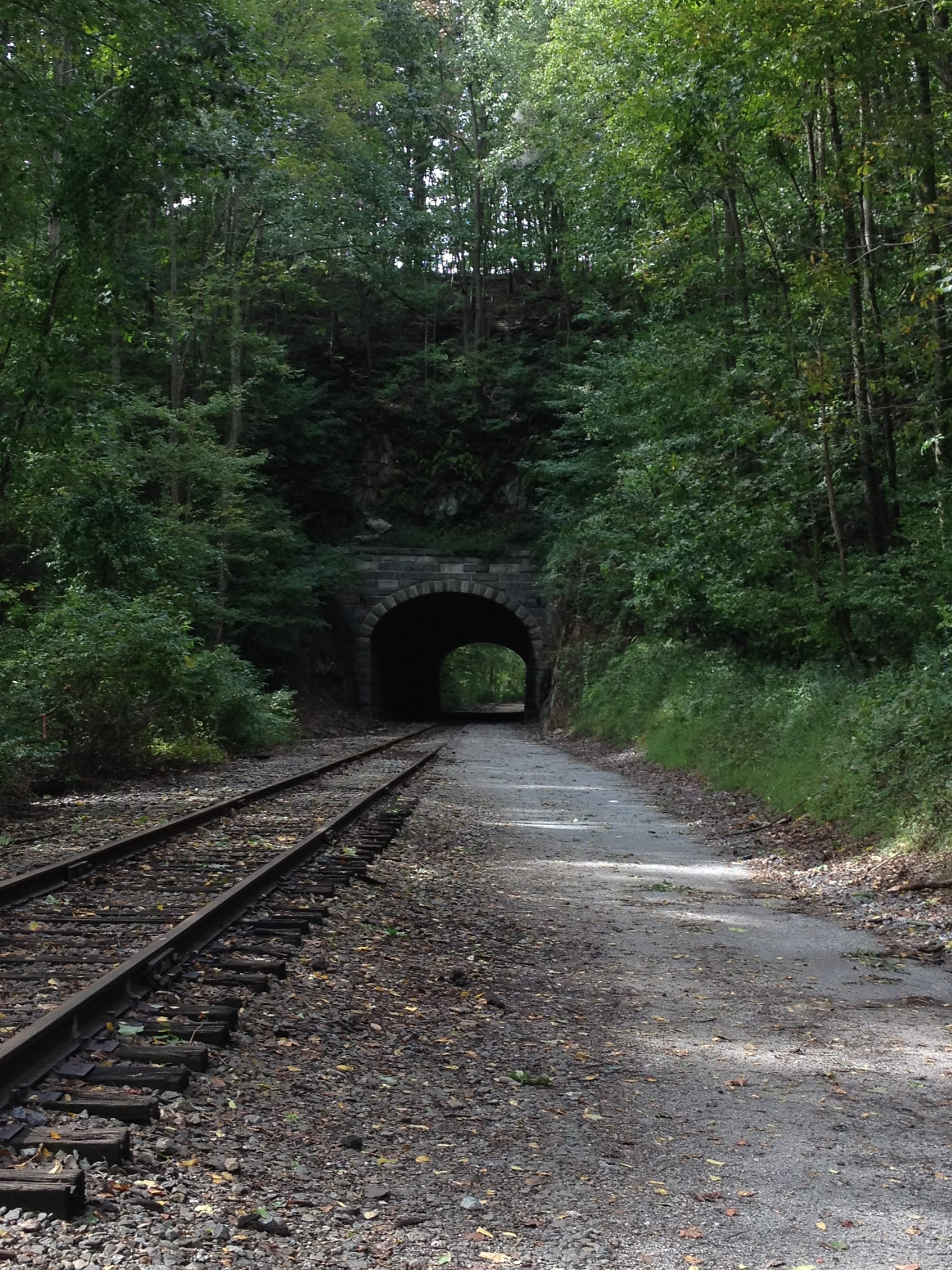
Exhibit 10 · Where the rails used to be
The Rail Trails
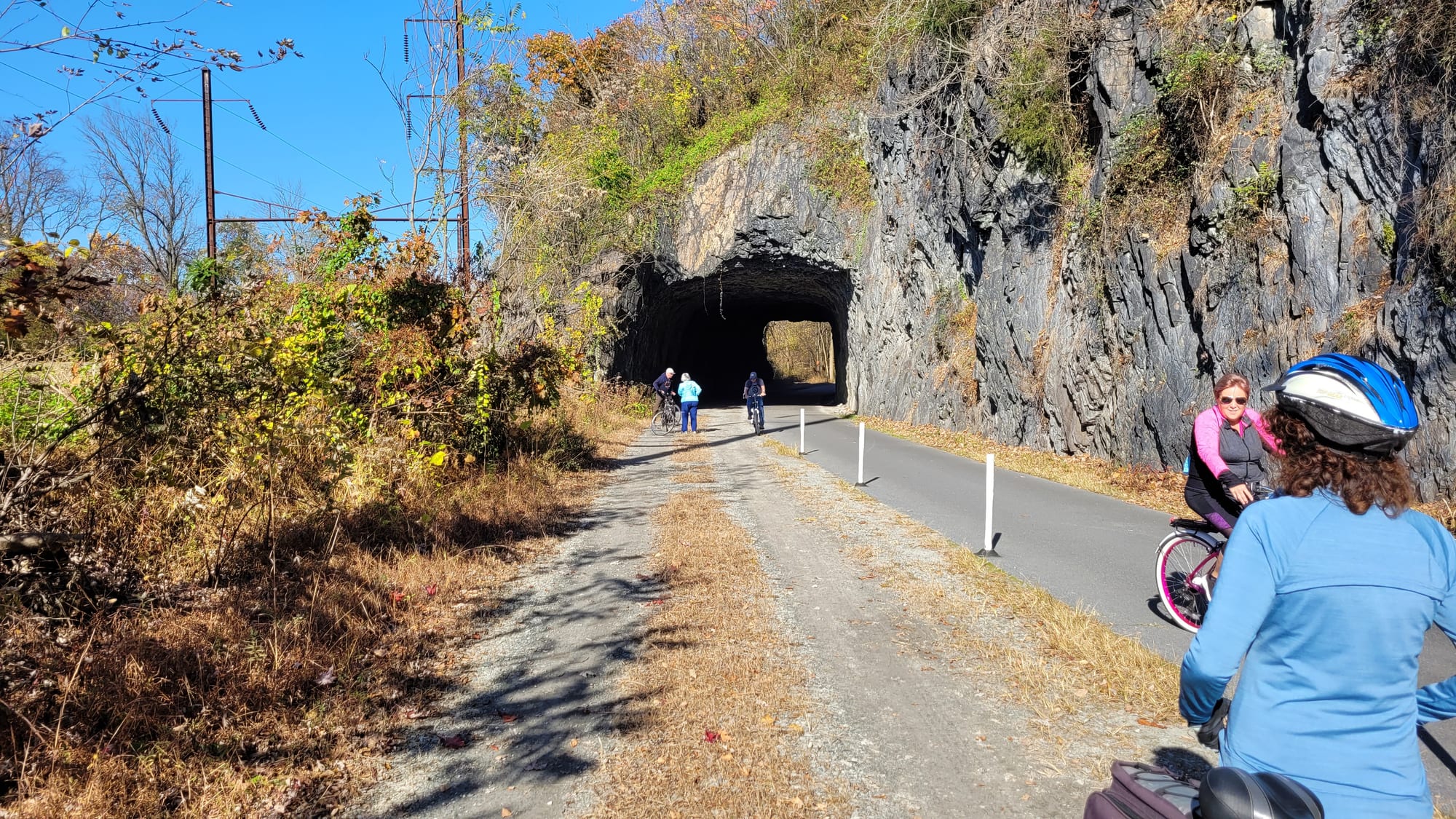
Exhibit 11 · Wherever the rails go
Out and About
Hand-picked from a decade of Earl's phone: railroad museums and roundhouses, garden railways in three states, tunnels and viaducts on old railbeds, steam excursions, the Rockville Bridge from the ground, and a brass locomotive model built on his own workbench.
2012–2025
Years of Work
Every photograph, in the order it was taken.
88 films · 33:48
The Screening Room
The layouts in motion — trains running, and the crew at work.
1308 items
From the Archive
Pull something at random from thirteen years of photographs.
The builder
About Earl
Earl Hayes has been around railroading his whole life. His grandfather spent some forty-seven years as a freight conductor on the Pennsylvania Railroad, and Earl grew up beside the tracks — close enough to play on them as a boy. He had his first train set at three. Around fourth grade, living in Haydenville, he built a six-by-eight-foot layout. In 1960, at thirteen, he built the first one that was entirely his own. He is almost eighty now, and he is still building.
He works in O gauge, on Lionel track, and he builds the hard way: benchwork framed and levelled by hand, grades and tunnels carved from foam with a hot wire, stone and brickwork built up, painted and aged, every siding wired and tested. Almost none of it is drawn first. There is the occasional sketch — a girder worked out to scale on graph paper — but the layout itself is designed in his head and built from there. He has never used software for any of it. That is a man who spent his career in engineering, with more than fifty patents and tool-and-die training, choosing to keep the whole thing in mind instead.
The detail is where it shows. Above a bridge arch he will darken the stone, because decades of steam exhaust would have blackened it. Ground cover is lichen and found material rather than anything from a packet. Accessories older than most of the crew get stripped and repainted rather than replaced. Skip that work and there is nothing left to look at — the detail is the thing. For years now he has led the volunteers who build the model railroad at the Mechanicsburg Museum Association, where every year the crew starts over: a brand-new layout, from bare benchwork, for a display anyone can walk up to for free.
You can't fix stupid.
Earl's standing verdict
Timetable
Dated entries below are anchored to real photographs from that year.
The 20 × 20 Layout
The Second Michigan Layout
Earl's Train Station
The Rockville Bridge
Leading the museum crew
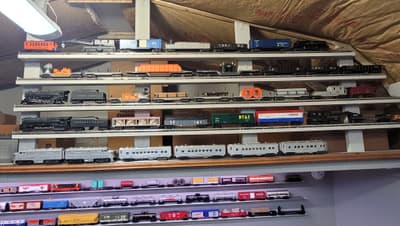
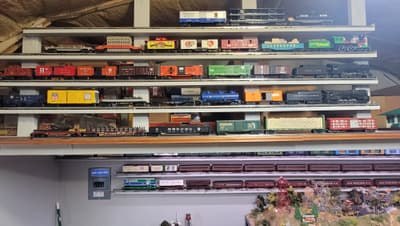
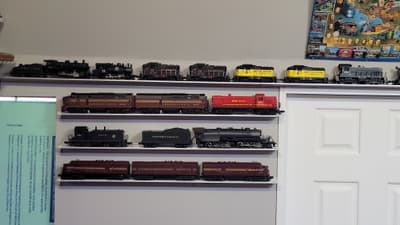
The crew
Support the Work
Earl volunteers his time leading a crew of more than ten people who design and build an entirely new model railroad every year for the Mechanicsburg Museum Association. It goes up in the old Cumberland Valley Railroad buildings the association has been preserving since 1975, and anyone can walk in and see it. Admission is free.
Contributions here support Earl and the museum's model railroading together — track, lumber, foam and scenery materials, lighting, and rolling stock for the layout the public comes to see. It keeps the hobby going, and it keeps something worth walking into in the middle of town.
Earl's Trains
Leave a tip
Secure checkout through Stripe
Nothing is expected, and visiting is always free. This is a personal contribution to Earl's model railroading work, not a tax-deductible donation to the museum.